
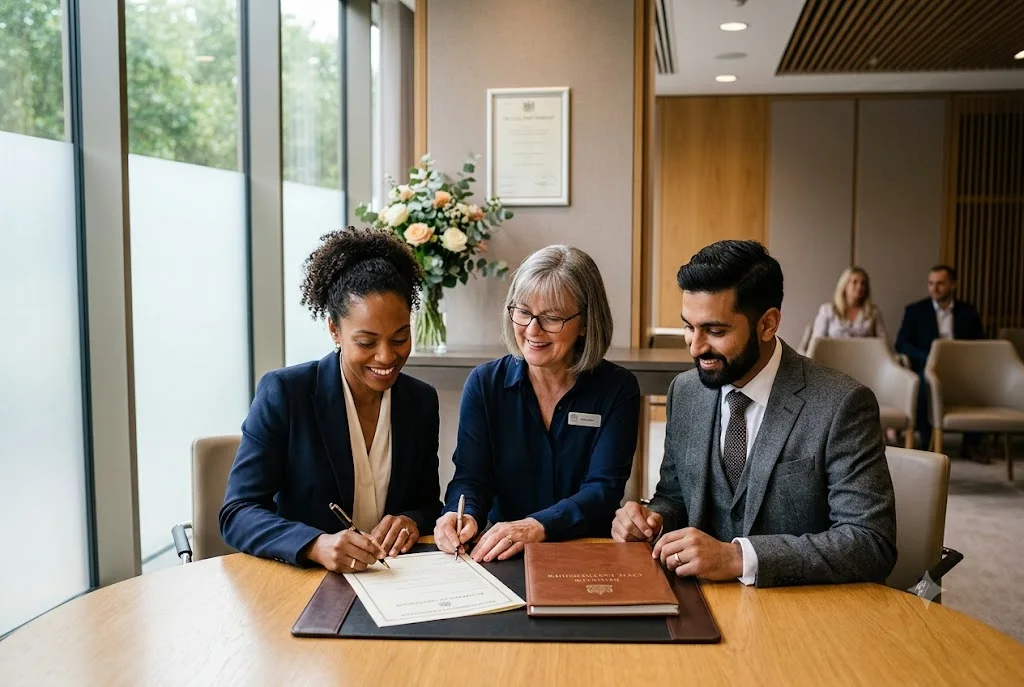

A civil partnership is a legally recognised relationship in the UK that provides couples with many of the same legal rights and responsibilities as marriage. Whether you are considering entering a civil partnership or simply want to understand your legal options, it is important to know how the law applies and how civil partnerships compare with marriage.
Since changes in UK law, both opposite-sex and same-sex couples can register a civil partnership. While many of the legal protections are similar to marriage, there are still differences that may influence your decision. Seeking advice from an experienced civil partnership solicitor can help you understand your rights before making an important commitment.
What Does Civil Partnership Mean?
If you are wondering what does civil partnership mean, it refers to a formal legal relationship created by signing a civil partnership schedule in the presence of witnesses and a registrar. Unlike a traditional marriage ceremony, there is no requirement for religious vows or a marriage ceremony, although many couples choose to celebrate their partnership in their own way.
The civil partnership meaning centres on legal recognition. Once registered, both individuals become civil partners with legal rights relating to finances, inheritance, pensions, tax, and family matters.
Who Can Enter a Civil Partnership?
In England and Wales, couples can register a civil partnership if they:
- Are both at least 18 years old (or meet applicable legal requirements for younger applicants where permitted).
- Are not already married or in another civil partnership.
- Are not closely related under UK law.
- Have the legal capacity to enter the partnership.
The registration process is governed by legal requirements, so obtaining advice from a civil partnership lawyer can be beneficial if your circumstances are more complex, such as involving overseas relationships or previous legal unions.
Rights of a Civil Partner
Becoming a civil partner creates significant legal protections similar to those enjoyed by married couples. These include:
- Inheritance rights.
- Pension benefits.
- Next-of-kin recognition.
- Parental responsibilities in certain circumstances.
- Tax advantages available under UK law.
- Financial protection if the relationship ends.
These legal rights provide financial security and certainty for couples who choose not to marry while still wishing to formalise their relationship.
Civil Partnership vs Marriage
One of the most common questions is civil partnership vs marriage. While the legal protections are largely similar, there are differences in how each relationship is created and recognised.
Formation
Marriage usually involves a legal ceremony where vows are exchanged. A civil partnership is created by signing legal documents before a registrar.
Religious Aspect
Marriage may include religious ceremonies if desired. Civil partnerships are generally civil legal processes without religious requirements.
Terminology
Marriage creates spouses, whereas a civil partnership creates civil partners.
Ending the Relationship
Marriage ends through divorce, while a civil partnership is legally dissolved through a dissolution process.
Many people researching marriage vs civil partnership or civil partner vs marriage discover that the practical legal outcomes are often very similar, making the decision largely a matter of personal preference.
Is a Civil Partnership a Marriage?
A common question is is a civil partnership a marriage. Legally, the answer is no. They are separate legal institutions established under different legislation.
However, both provide extensive legal rights and obligations regarding finances, inheritance, pensions, property, and family matters. The main distinction lies in how the relationship is formed rather than the protections it provides.
When Should You Consult a Civil Partnership Lawyer?
Although many registrations are straightforward, certain situations benefit from professional legal advice. A civil partnership lawyer can assist if:
- You own significant assets.
- You have children from previous relationships.
- You have international property or overseas connections.
- You want advice before entering the partnership.
- You are considering ending a civil partnership.
Experienced civil partnership lawyers help couples understand their legal rights before and after registration, reducing the risk of future disputes.
Role of a Civil Partnership Solicitor
A qualified civil partnership solicitor can provide guidance on:
- Legal eligibility.
- Property ownership.
- Inheritance planning.
- Financial arrangements.
- Parental rights.
- Dissolution procedures.
Professional advice can be especially valuable where substantial assets or family arrangements are involved. Civil partnership solicitors can also explain how existing legal agreements may be affected after registration.
Ending a Civil Partnership
If a relationship breaks down, a civil partnership does not end automatically. A legal dissolution process is required through the courts.
Issues that may need to be resolved include:
- Division of property.
- Financial settlements.
- Pensions.
- Child arrangements.
- Ongoing financial responsibilities.
Many of these issues closely resemble those arising during divorce proceedings. If finances become a concern, you may also find it helpful to understand the cost of divorce and how financial matters are handled through a divorce financial settlement, as similar legal principles may apply during dissolution.
Choosing Between Marriage and Civil Partnership
Deciding between marriage and a civil partnership depends on your personal, cultural, religious, and legal preferences. Both provide legal recognition and significant protections, but each follows a different legal framework.
Before making your decision, consider:
- Your long-term financial plans.
- Your family circumstances.
- Your personal beliefs.
- Your future property ownership.
- Your inheritance planning.
Independent legal advice ensures you understand the implications before entering either type of legal relationship.
Conclusion
A civil partnership offers couples in the UK a legally recognised relationship with many of the same rights and protections as marriage. Understanding what a civil partnership means, how it differs from marriage, and the legal responsibilities involved allows you to make informed decisions for your future.
If you are considering registering a civil partnership or need advice regarding your rights, speaking with experienced civil partnership solicitors can provide clarity tailored to your individual circumstances. You can also learn more about family law guidance from the UK Government’s official guidance on marriages and civil partnerships.
