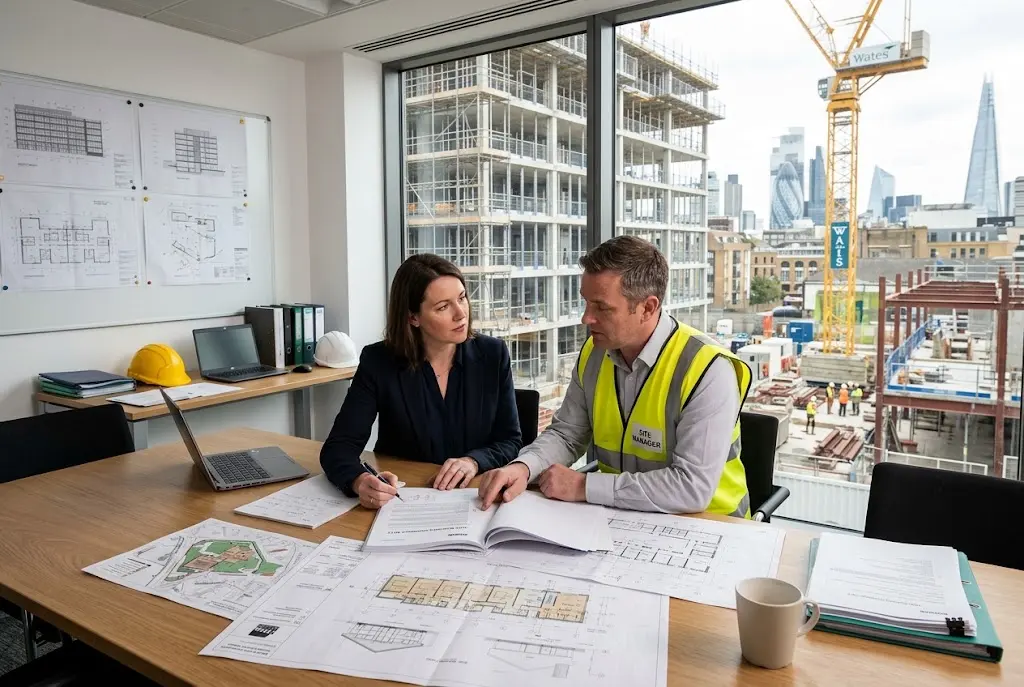

Construction law covers the legal issues that can arise during building, engineering and property development projects. It can affect developers, contractors, subcontractors, consultants, suppliers and other businesses involved in the construction industry.
Construction projects often involve multiple parties, substantial financial commitments and detailed contractual obligations. As a result, disagreements about payment, delays, defective work, variations and responsibility for losses can become commercially significant very quickly.
Understanding the legal framework surrounding a project can help businesses identify risks earlier, negotiate clearer agreements and respond more effectively when a dispute develops.
What Is Construction Law?
Construction law is a broad area of legal practice dealing with contracts, obligations, disputes and other legal matters connected with construction and engineering projects.
It is not limited to disputes that reach court. Legal considerations can arise from the earliest stages of a project, including procurement and contract negotiations, and continue through construction, completion and any subsequent defects or claims.
Depending on the project, construction-related legal work can involve contractual interpretation, payment rights, delay claims, professional negligence, defective workmanship, insurance and dispute resolution.
Why Construction Contracts Matter
Construction projects depend heavily on contracts because they involve a series of obligations between different participants. The contract should establish what each party must provide, when it must be provided and how payment will be calculated.
Important contractual provisions may cover:
- the scope of the construction works;
- project specifications and drawings;
- contract price and payment arrangements;
- completion dates and extensions of time;
- variations and changes to the works;
- quality and performance requirements;
- responsibility for defects;
- insurance and liability;
- termination rights; and
- procedures for resolving disputes.
A carefully prepared agreement can provide a useful framework for managing the project. However, the contract should reflect the actual commercial and technical circumstances rather than simply relying on generic wording.
Construction Law and Dispute Resolution
Construction law and dispute resolution are closely connected because disagreements can arise at almost any stage of a building project. The appropriate method of resolving a dispute depends on the contract, the nature of the disagreement and the circumstances of the parties.
Construction disputes may concern the amount owed, responsibility for delay, defective work, variations or whether one party has complied with its contractual obligations.
Where a contract contains a specific dispute-resolution procedure, the parties may need to follow that procedure before pursuing other forms of legal action.
Negotiation
Negotiation is often the first practical step when a disagreement develops. The parties can discuss the underlying issue and attempt to reach a commercially acceptable solution without formal proceedings.
A negotiated settlement can sometimes save time and cost while allowing the parties to preserve an ongoing commercial relationship.
Mediation
Mediation involves an independent third party helping the disputing parties explore whether an agreed settlement can be reached.
The mediator does not normally decide the dispute. Instead, the process gives the parties an opportunity to understand each other’s positions and consider possible solutions.
Adjudication
Construction projects in the UK can involve statutory adjudication mechanisms, particularly under the Housing Grants, Construction and Regeneration Act 1996. The legislation provides a framework intended to support the resolution of certain construction disputes during projects.
The precise rights and procedures depend on the circumstances and the relevant contract. Businesses involved in a construction dispute should therefore consider the applicable contractual and statutory requirements carefully.
Arbitration and Court Proceedings
Some construction contracts provide for arbitration, while other disputes may ultimately proceed through the courts. The appropriate route can depend on the agreement between the parties, the nature of the claim and the remedy being sought.
Legal advice can help establish which dispute-resolution mechanism applies and what procedural steps need to be taken.
Common Construction Disputes
Construction disputes can arise from many different aspects of a project. Some of the most common areas of disagreement involve money, timing, quality and changes to the agreed works.
Payment Disputes
Payment is one of the most commercially important issues on construction projects. Disagreements can concern the amount due, valuation of work, payment notices, deductions or whether particular work has been completed satisfactorily.
Because cash flow can be critical to contractors and subcontractors, payment disagreements can quickly affect the wider project.
Delay and Extension of Time
Projects can be delayed by design changes, late information, unforeseen conditions, supply problems, labour issues or the actions of another party.
Determining responsibility for a delay can be complicated. The contract may establish specific procedures for notifying delays and seeking an extension of time, making accurate project records particularly important.
Defective Work
Disagreements can also arise when completed work does not meet the required specification or expected standard. The parties may disagree about the nature of the defect, responsibility for correcting it and who should bear the associated costs.
Variations and Changes
Construction projects frequently change after work has started. A client may request additional work, specifications may be amended or circumstances may require a different approach.
The contract should ideally establish how variations are authorised, valued and incorporated into the project. Informal changes can create uncertainty when the parties later disagree about additional costs or completion dates.
Why Construction Documentation Matters
Good documentation can be extremely valuable when a construction dispute arises. Project records may help establish what happened, when it happened and which party was responsible.
Depending on the project, relevant records can include contracts, drawings, specifications, payment documents, invoices, photographs, site records, programmes, emails, meeting minutes and variation instructions.
Businesses should maintain organised records throughout the project rather than attempting to reconstruct events after a dispute has already developed.
Construction Law and Contractual Obligations
Many construction disputes ultimately involve questions about the meaning or performance of contractual obligations. This makes general contract principles highly relevant to construction projects.
Businesses entering construction agreements should understand how the contract allocates responsibility for performance, payment, delay and risk.
Our guide to a business to business contract explains broader principles that can also be relevant to commercial construction arrangements.
Similarly, understanding the principles behind a legally enforceable contract can help businesses appreciate why clear agreement and carefully defined obligations matter before a construction project begins.
Managing Risk Before a Construction Project Starts
Many legal problems are easier to prevent than resolve. Before work begins, businesses should carefully review the proposed contract and identify provisions that could create significant commercial exposure.
Questions worth considering include:
- Is the scope of work clearly defined?
- Are payment procedures understood?
- How are delays and extensions of time handled?
- Who is responsible for design obligations?
- How are variations authorised and valued?
- What happens if defective work is discovered?
- What insurance arrangements are required?
- How can the contract be terminated?
- What dispute-resolution process applies?
These questions do not replace project-specific legal advice, but they can help businesses identify areas that require closer attention.
Construction Law for Contractors and Subcontractors
Contractors and subcontractors can face particular risks because their commercial position may depend on payment from another participant in the project.
They should understand the obligations imposed by their contracts, including requirements relating to programme, quality, notices, variations and payment applications.
Subcontractors should also understand how their agreement interacts with the wider project. A subcontract may contain obligations that differ from those applying under the main contract, creating potential issues if responsibilities are not properly coordinated.
Construction Law for Developers and Clients
Developers and clients also need to manage significant contractual and commercial risks. A project may involve substantial expenditure before construction is complete, meaning delays or defective work can have wider financial consequences.
Clear specifications, appropriate contractual protections and effective project management can help establish expectations from the outset.
Where multiple contractors and consultants are involved, businesses should also consider how responsibility is allocated between the different participants.
Can Construction Disputes Be Avoided?
No construction project is completely free from risk, but careful planning can reduce the likelihood and impact of disputes.
Clear contracts are an important starting point. So are accurate records, timely communication and adherence to contractual procedures.
When a potential disagreement first appears, addressing it promptly can also prevent a relatively small issue from developing into a much larger claim.
Businesses should not assume that silence or informal discussions will resolve a contractual problem. Where the financial or legal consequences are significant, professional advice can help clarify the position and available options.
When Should You Seek Construction Legal Advice?
Legal advice can be valuable before a construction contract is signed, during a project when a significant contractual issue arises, or after a dispute has developed.
Early advice may help identify problematic provisions before they become costly problems. During a project, advice can help a business understand its rights concerning payment, delay, variations or defects.
Where a formal dispute is underway, specialist advice can help establish the appropriate procedure and ensure that important contractual or statutory requirements are considered.
How Construction Law Supports Better Commercial Decisions
Construction law should not be viewed solely as a tool for resolving disputes. It can also support better commercial decision-making before problems occur.
Businesses that understand their contractual obligations are better placed to assess project risks, negotiate appropriate terms and maintain useful records. This can be particularly important for complex projects involving multiple companies and substantial financial commitments.
Construction work may also intersect with other areas of business law. For example, businesses working with competitors or participating in tender processes may need to consider competition law alongside their construction-related contractual obligations.
Final Thoughts on Construction Law
Construction law covers a wide range of legal issues affecting building and engineering projects in the UK. Contracts, payments, delays, variations, defects and dispute resolution can all become important as a project develops.
The best time to consider legal risk is usually before a dispute occurs. Clear contractual terms, accurate documentation and effective communication can provide a stronger foundation for managing unexpected problems.
When a significant construction issue arises, businesses should assess the contract and applicable legal framework carefully rather than relying on assumptions. Specialist legal advice can help identify the available options and determine the most appropriate way forward.
For official information about statutory construction adjudication and related payment provisions, businesses can review the Housing Grants, Construction and Regeneration Act 1996.
